The Hidden Mechanics of Space Exploration: What It Takes to Design for Mars
Humanity’s dream of setting foot on Mars is no longer confined to science fiction — it’s becoming a tangible reality. But behind every mission lies an intricate network of engineering marvels, scientific breakthroughs, and technological innovations that make interplanetary travel possible. Designing for Mars isn’t just about rockets — it’s about surviving an alien world.
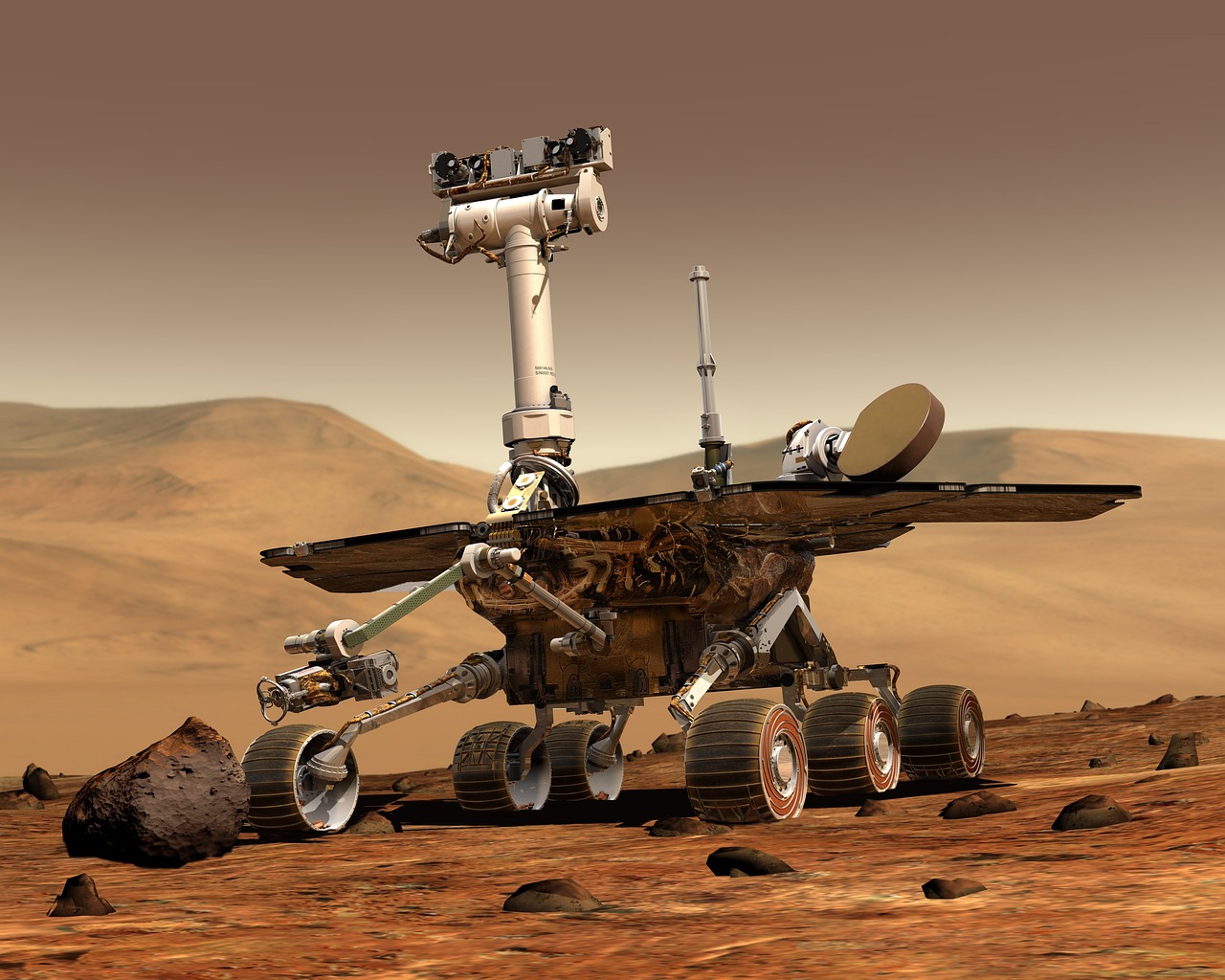 |
| The Hidden Mechanics of Space Exploration: What It Takes to Design for Mars |
The Harsh Reality of the Martian Environment
Mars is a planet of extremes — freezing temperatures, dust storms, and thin atmosphere. Engineers must account for:
- Temperature swings from +20°C to –125°C
- Atmospheric pressure less than 1% of Earth’s
- Dust storms lasting weeks, covering the entire planet
- Cosmic radiation exposure nearly 250 times higher than on Earth
Every spacecraft, rover, and potential habitat must be built to endure these hostile conditions without human maintenance.
Designing the Perfect Spacecraft
Mars missions require precision engineering. Spacecraft must survive high-speed entry, descent, and landing (EDL) — what NASA calls the “Seven Minutes of Terror.”
Key design considerations include:
- Thermal protection systems (TPS): To resist reentry heat.
- Adaptive landing gear: For unpredictable terrain.
- Autonomous navigation: Mars has no GPS, so AI handles guidance and obstacle avoidance.
Each mission, from Viking to Perseverance, pushes the limits of aerospace materials and AI-assisted flight control.
The Role of Artificial Intelligence in Martian Design
With a communication delay of up to 22 minutes between Earth and Mars, real-time control is impossible. That’s why NASA, SpaceX, and ISRO are developing AI-driven systems capable of decision-making during critical mission phases.
AI helps:
- Detect landing hazards using onboard vision systems.
- Manage power efficiency for solar panels.
- Predict mechanical failures before they occur.
Building Habitats That Can Survive
Designing habitats for humans on Mars is a feat of aerospace architecture. Engineers must consider both sustainability and safety:
- Radiation shielding: Using Martian regolith as a protective layer.
- Closed-loop life support systems: Recycling air, water, and waste.
- 3D printing technology: For constructing habitats using local materials.
Projects like NASA’s Mars Dune Alpha and ESA’s Luna 27 are pioneering such solutions, merging robotics, material science, and human ergonomics.
Propulsion: The Core of Interplanetary Travel
To reach Mars efficiently, new propulsion systems are under development:
- Ion drives for continuous low-thrust acceleration.
- Nuclear thermal propulsion (NTP) for faster transit times.
- Reusable launch systems like SpaceX’s Starship to cut mission costs.
Each innovation is a step toward a sustainable Mars transport network — crucial for long-term colonization.
Why Mars Matters
Exploring Mars isn’t just about discovery — it’s about advancing humanity’s technological frontier. Every challenge pushes scientists to innovate in energy efficiency, robotics, materials, and AI — technologies that ultimately benefit life on Earth too.
Final Thoughts
The journey to Mars is more than an expedition — it’s a mechanical symphony of innovation. From AI-driven landing systems to self-sustaining habitats, each design choice reveals how far human engineering can go.
As we prepare for our next giant leap, one thing is certain: the mechanics of space exploration are as extraordinary as the cosmos itself.


