The forgotten 18th-century mind who foresaw the universe’s darkest secret
Long before Einstein reshaped our understanding of space and time, an English scientist named John Michell had already glimpsed one of the universe’s most mysterious phenomena — black holes. Nearly 150 years before general relativity, Michell theorized the existence of “dark stars,” objects so dense that not even light could escape their gravity. His work, largely ignored in his time, now stands as one of the most visionary scientific predictions in history.
The Forgotten Genius
Born in 1724, John Michell was a Cambridge-educated physicist, geologist, and clergyman — a true polymath of the Enlightenment. Despite his brilliance, he lived in relative obscurity. Yet his ideas spanned fields from astronomy to magnetism, and his insight into cosmic gravity was centuries ahead of his peers.
In 1783, Michell presented a paper to the Royal Society of London, describing what he called “dark stars.” Using Newtonian physics, he reasoned that if a star’s mass were large enough and its radius small enough, its escape velocity would exceed the speed of light, causing it to disappear from view.
He even suggested that these invisible stars might still exert gravitational influence — a concept eerily similar to the way we detect black holes today.
Before Einstein — and Before the Telescope Could Prove It
At the time, light was believed to consist of tiny particles, and Michell’s calculations were rooted in Newton’s laws of motion. What he didn’t know was that his “dark stars” perfectly matched what Einstein’s General Theory of Relativity (1915) would later describe as black holes — regions where gravity bends spacetime so extremely that not even light can escape.
Unfortunately, the scientific tools to observe such phenomena didn’t exist in Michell’s era. His paper was filed away, his ideas forgotten, and for nearly two centuries, the world overlooked the man who discovered black holes before black holes existed.
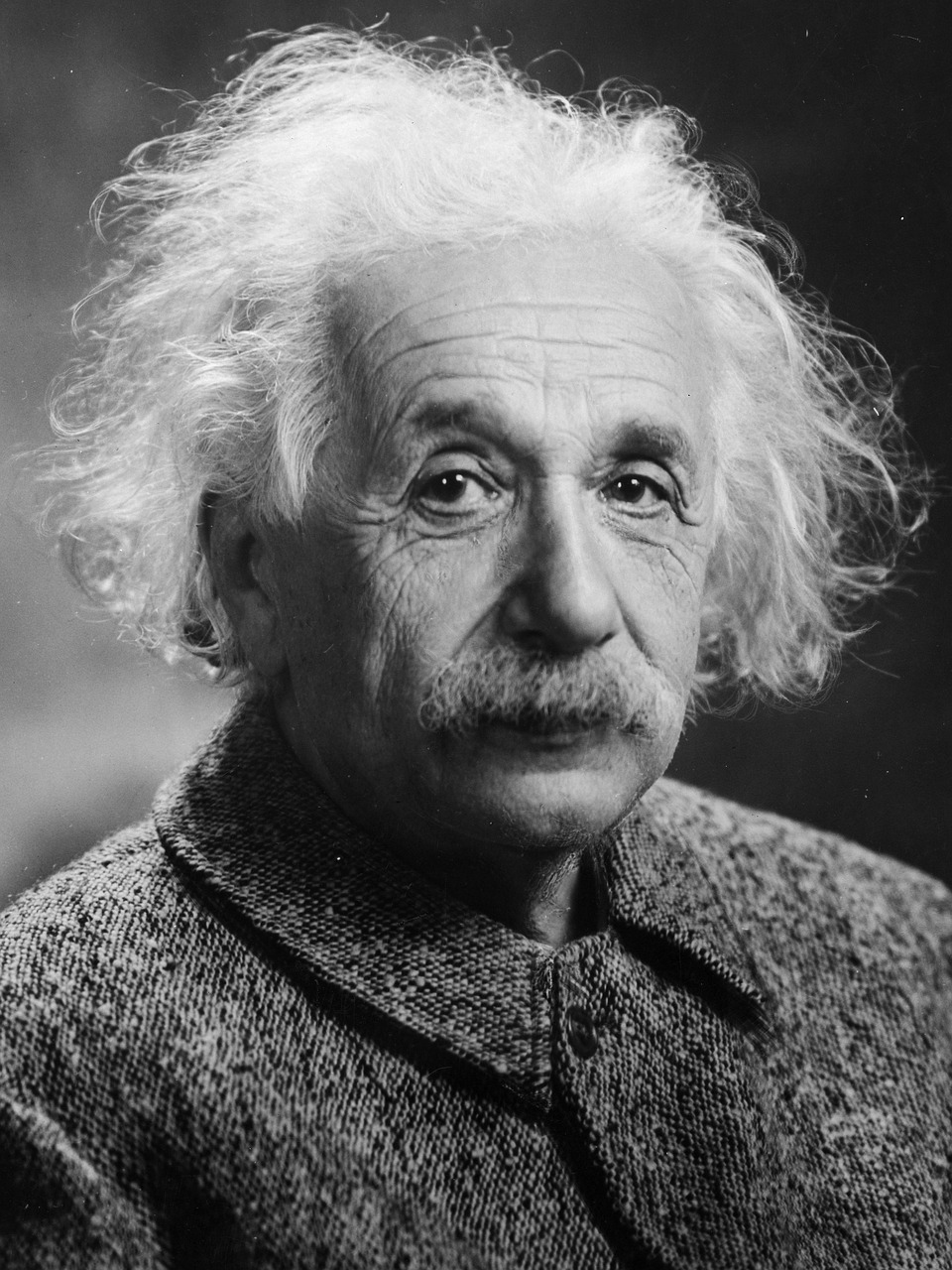 |
| Albert Einstein : Advanced Tech World |
Rediscovery and Legacy
In the 20th century, astrophysicists reexamined Michell’s writings and were stunned by his precision. He had even proposed using the motion of companion stars to detect invisible ones — the exact technique later used to identify black holes like Cygnus X-1.
Einstein’s equations may have formalized the physics, but Michell’s thought experiment revealed the concept first. Today, he is often called “the father of black hole theory”, though his name remains far less known than those of Hawking or Einstein.
The Vision That Time Almost Buried
John Michell’s story is not just about science — it’s about how visionary ideas can vanish in the shadows of history. His “dark stars” remind us that the path to discovery is not always linear, and that even centuries-old theories can echo through modern astrophysics.
As telescopes now capture images of real
black holes — the dark hearts of galaxies — we owe a silent tribute to the man
who saw them long before anyone else:
John
Michell — the scientist who predicted black holes before Einstein.


