Broaching is one of the fastest, most accurate, and most efficient metal-cutting processes used in modern manufacturing. Whether it’s producing keyways, splines, gears, or precise internal profiles, broaching delivers unmatched consistency and surface finish. This is why industries like automotive, aerospace, defense, and heavy machinery rely heavily on it.
But what exactly is broaching? How does it work? And why is it so important in high-precision engineering?
Let’s break it down.
What Is Broaching?
Broaching is a machining process that uses a long tool called a broach, made up of multiple cutting teeth arranged in increasing height. As the broach passes through or over the workpiece, each tooth removes a small amount of metal.
This results in a single-pass operation capable of producing extremely accurate shapes.
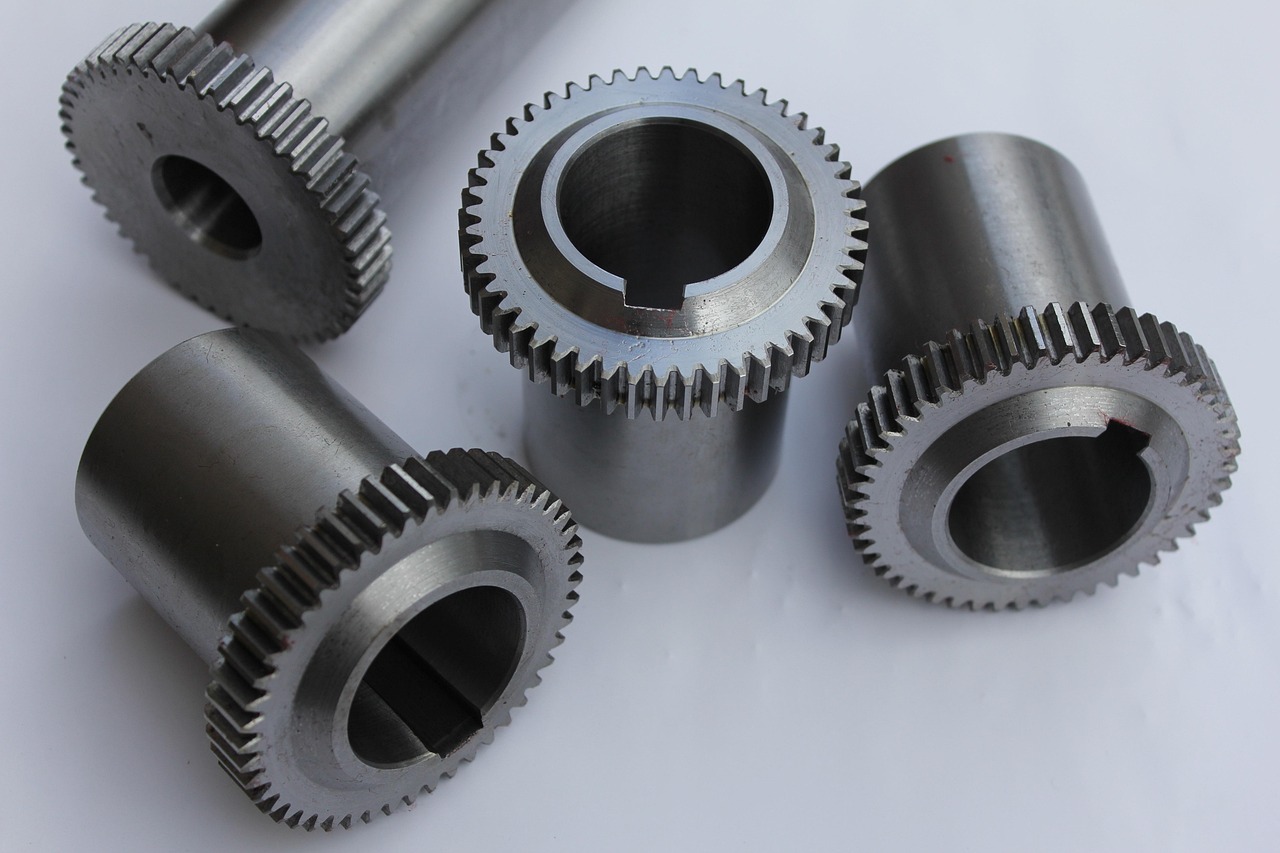 |
| Broaching in Mechanical Engineering: The Precision Cutting Process Every Engineer Should Know |
Types of Broaching in Mechanical Engineering
✅ 1. Internal Broaching
Used to cut internal shapes such as:
· Keyways
· Splines
· Hexagonal holes
· Round-to-square conversions
The broach is pulled or pushed through a pre-drilled hole.
✅ 2. External Broaching
Used for shaping the outside of a workpiece, such as:
· Flat surfaces
· Gear teeth
· Turbine blade profiles
The broach moves across the surface in a single stroke.
✅ 3. Pull Broaching
The most common method, where the broach is pulled through the workpiece to reduce load on teeth and prevent buckling.
✅ 4. Push Broaching
Used for small, short, or shallow cuts.
Force is applied to push the broach through the material.
✅ 5. Rotary Broaching
Used in CNC machines and lathes.
Creates polygons (hex, square, torx) inside or outside a rotating workpiece.
Popular in fastener, gear, and aerospace manufacturing.
How Broaching Works (Step-by-Step)
1.
Starting Tooth (Roughing)
Removes initial amount of metal.
2.
Intermediate Teeth (Semi-Finishing)
Gradually enlarge or shape the profile.
3.
Finishing Teeth
Deliver final dimension with tight tolerance.
4.
Polishing Teeth
Provide smooth surface finish, often as low as 0.8 µm Ra.
Broaching achieves the full cut in one continuous stroke.
Advantages of Broaching
⭐ 1. Unmatched Accuracy
Tolerances as tight as ±0.01 mm can be achieved repeatedly.
⭐ 2. Superior Surface Finish
Produces smooth, polished surfaces without secondary machining.
⭐ 3. Fast Production
One stroke = complete shape.
Perfect for high-volume manufacturing.
⭐ 4. Complex Shapes Are Easy
Even irregular and spline profiles are possible with custom broaches.
⭐ 5. Minimal Skill Required
Machine setup determines everything; operator skill has minimal effect.
Limitations of Broaching
Even though broaching is powerful, it has some drawbacks:
· High initial tool cost (broaches are expensive to manufacture)
· Not ideal for low-volume production
· Requires pre-drilled or pre-shaped holes
· Broach length limits workpiece size
Despite this, industries needing precision and volume still prefer broaching.
Applications of Broaching
🚗 Automotive Industry
· Gear cutting
· Steering components
· Transmission splines
🛠️ Tool Manufacturing
· Wrenches
· Torx and hex profiles
✈️ Aerospace
· Turbine disks
· Jet engine components
🔧 Industrial Machinery
· Couplings
· Keyway production
Wherever consistency, accuracy, and speed matter—broaching dominates.
Why Broaching Is Still Relevant in Modern Mechanical Engineering
Even with CNC machining, EDM, laser cutting, and additive manufacturing, broaching remains irreplaceable for certain profiles. Its efficiency, repeatability, and long tool life make it extremely cost-effective in mass production.
Broaching is simply the king of precision shaping, and industries rely on it because no other process can match its combination of accuracy and speed


